In high-temperature industrial furnaces, the choice of insulation materials has a profound impact on energy efficiency and operational costs. This article reveals empirical thermal conductivity measurements of zirconia ceramic fiber blankets at an extreme temperature of 1800°C, providing valuable insights into how optimized raw material blending and advanced manufacturing techniques can significantly enhance thermal resistance.
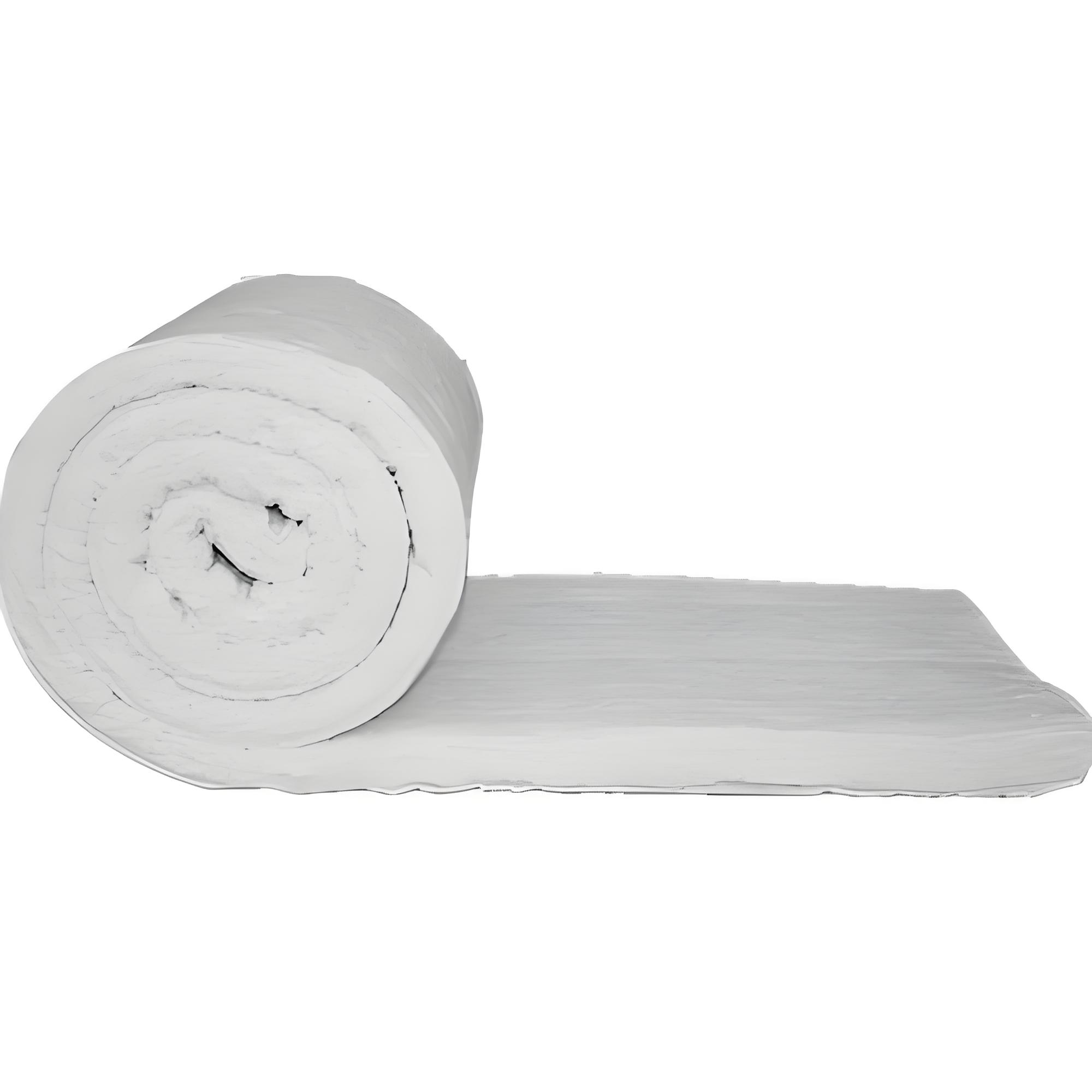
The production of flexible ceramic fiber blankets involves four critical stages, each influencing the material’s thermal conductivity, thermal expansion, and mechanical durability:
Each stage plays an indispensable role in minimizing heat transfer, as improper control can increase thermal bridging or reduce mechanical resilience.
Recent advancements include integrating nano-scale alumina and silica particles into the fiber matrix, which disrupt phonon paths and improve heat resistance beyond conventional ceramic fibers. Surface modification treatments further reduce emissivity, curbing radiative heat transfer—the dominant mechanism at temperatures above 1000°C.
These breakthroughs contribute to achieving ultralow thermal conductivity values. In controlled experiments, zirconia-based ceramic fiber blankets demonstrated thermal conductivity ≤ 0.12 W/(m·K) at 1800°C, outperforming traditional refractory bricks that typically exceed 0.3 W/(m·K).
When benchmarked against traditional refractory materials, flexible zirconia ceramic fiber blankets exhibit multiple advantages:
| Property | Zirconia Ceramic Fiber Blanket | Traditional Refractory Brick |
|---|---|---|
| Thermal Conductivity at 1800°C | ≤ 0.12 W/(m·K) | > 0.3 W/(m·K) |
| Thermal Expansion Coefficient | 4–6 ×10⁻⁶ /K | 8–12 ×10⁻⁶ /K |
| Mechanical Flexibility | High (Easy installation & retrofit) | Low (Brittle, heavy) |
| Energy Saving Potential | Significant (Up to 20% reduction in heat loss) | Moderate |
The reduced thermal conductivity and lower thermal expansion reduce crack formation risks under cyclic heating, preserving insulation integrity and extending service life. Moreover, the lightweight and pliable nature of ceramic fiber blankets offers simplified installation and maintenance.
Based on current industrial experience, manufacturers and end-users can enhance insulation performance by:
Such optimization not only improves heat insulation but also increases mechanical strength and dimensional stability under operational stresses.

What challenges have you faced in selecting or applying insulation materials for extreme-temperature environments? Which performance characteristics matter most for your operations? Your experience and questions help foster a thriving technical community—please share below.
Zhengzhou Rongsheng Refractory Materials Co., Ltd. utilizes internationally certified production processes to ensure each batch meets stringent CE and ISO standards, offering comprehensive technical guidance and after-sales service to empower your insulation projects.
 433
|
433
|
 ceramic fiber modules internationally certified ceramic fiber insulation industrial furnace insulation materials high-temperature refractory modules energy-saving refractory solutions
413
|
high temperature furnace insulation material flexible ceramic fiber blanket ceramic fiber blanket application case industrial furnace energy saving retrofit zirconia ceramic fiber blanket
235
|
high temperature fireproof panels calcium silicate fireboard industrial refractory materials fireproof panel certification thermal insulation performance
60
|
ceramic fiber insulation blanket high-temperature industrial insulation refractory insulation materials CE certified insulation blanket energy-efficient thermal insulation
176
|
high temperature furnace insulation materials ceramic fiber blanket performance insulation material selection for industrial furnaces energy-saving refractory materials ceramic fiber blanket temperature limit
ceramic fiber modules internationally certified ceramic fiber insulation industrial furnace insulation materials high-temperature refractory modules energy-saving refractory solutions
413
|
high temperature furnace insulation material flexible ceramic fiber blanket ceramic fiber blanket application case industrial furnace energy saving retrofit zirconia ceramic fiber blanket
235
|
high temperature fireproof panels calcium silicate fireboard industrial refractory materials fireproof panel certification thermal insulation performance
60
|
ceramic fiber insulation blanket high-temperature industrial insulation refractory insulation materials CE certified insulation blanket energy-efficient thermal insulation
176
|
high temperature furnace insulation materials ceramic fiber blanket performance insulation material selection for industrial furnaces energy-saving refractory materials ceramic fiber blanket temperature limit






.png?x-oss-process=image/resize,h_100,m_lfit/format,webp)
.png?x-oss-process=image/resize,h_100,m_lfit/format,webp)
.png?x-oss-process=image/resize,h_100,m_lfit/format,webp)