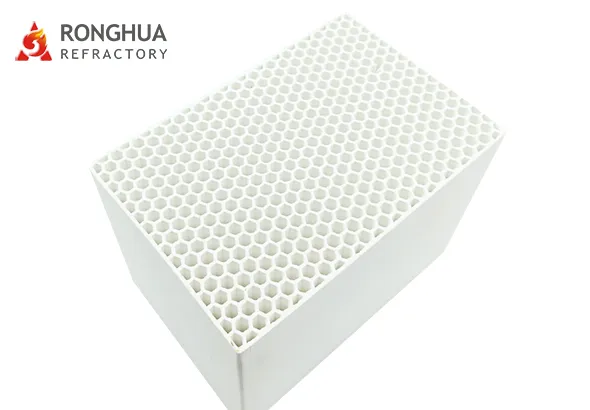
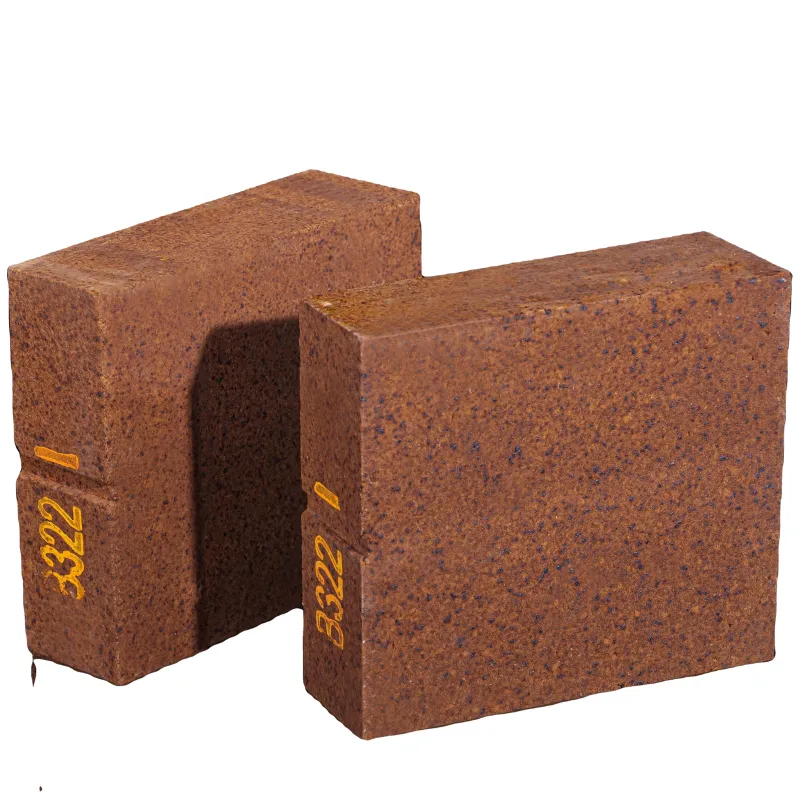
Ceramic Fiber Board for Industrial Furnaces: High-Temperature Insulation Selection Guide (Up to 1430°C)
Rongsheng Refractory
2026-02-14
Technical knowledge
Selecting high-temperature insulation for industrial kilns and furnaces directly impacts energy efficiency, safety, and maintenance cycles. This article provides a practical, engineering-focused overview of ceramic fiber board, highlighting key performance data such as a maximum service temperature up to 1430°C and a thermal conductivity of only 0.19 W/m·K at 1000°C. It also compares ceramic fiber board with traditional refractory brick and lightweight castable in terms of heat loss, lining weight, installation efficiency, and typical service life. Real-world application scenarios across steel, glass, and chemical processing—such as wall back-up insulation, roof/cover insulation, and hot-zone thermal barriers—are used to help engineers and procurement teams evaluate suitability for specific operating conditions. The content includes parameter-based decision tips, a thermal conductivity comparison chart concept, and a brief Q&A section to support faster selection. For additional product documentation and technical assistance, readers are invited to visit the company website.
Why High-Temperature Insulation Selection Matters in Industrial Furnaces
In steel reheating furnaces, glass melting tanks, and chemical cracking units, insulation is rarely treated as a “performance lever” until energy bills climb, hot spots appear, or maintenance windows get shorter. Yet in most high-temperature systems, heat loss through the lining and shell can account for 20–35% of total input energy, depending on furnace geometry, operating temperature, and lining design. Selecting the right high-temperature insulation is therefore less about picking a “hotter-rated” material and more about matching thermal conductivity, temperature limit, thermal stability, and installation constraints to the process reality.
Among modern insulation options, ceramic fiber board is widely considered for furnace wall insulation, roof lining, and thermal channel isolation because it combines low thermal conductivity with high service temperatures—often enabling measurable energy reduction and faster heat-up cycles.
Ceramic Fiber Board: Core Performance Parameters Engineers Actually Use
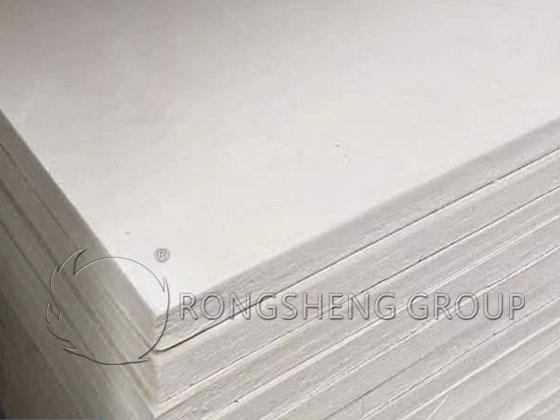
Ceramic fiber board is typically manufactured from alumina-silica fibers, formed under vacuum and rigidized to deliver a stable, machinable insulation panel. For furnace projects, selection usually starts with three data sets: maximum service temperature, thermal conductivity, and thermal stability under cycling.
1) Maximum Service Temperature
Premium grades commonly reach a maximum service temperature up to 1430°C, enabling use in high-heat zones where many lightweight insulation products begin to sinter or shrink. For continuous operation, designers often apply a safety margin (for example, operating at 100–150°C below the stated limit) depending on atmosphere, vibration, and thermal cycling intensity.
2) Thermal Conductivity (k-value)
A key reason ceramic fiber board is chosen for energy-saving retrofits is its low k-value at elevated temperature. A typical reference value is 0.19 W/m·K at 1000°C. For comparison, dense firebrick at similar temperatures often ranges around 1.2–1.6 W/m·K, while many lightweight castables are commonly 0.35–0.60 W/m·K depending on formulation and density.
3) Thermal Stability & Cycling Resistance
In real furnaces, materials rarely see steady conditions. Start/stop schedules, door openings, and load changes generate thermal shock. Ceramic fiber board is valued for maintaining insulation integrity under cycling, with many industrial boards exhibiting low linear shrinkage when correctly selected for the operating temperature band. Good practice is to review shrinkage data (e.g., after 24 hours at 1200–1400°C) before finalizing the lining stack.
Good compromise, curing/drying needed, longer shutdown
Values above are common industry reference ranges used during preliminary selection; final specs should follow the manufacturer’s datasheet and the furnace’s atmosphere, mechanical load, and cycle profile.
Ceramic Fiber Board vs. Firebrick vs. Lightweight Castable: Where the Energy Goes
Engineers tend to focus on maximum temperature rating, but operational cost is often dominated by two less visible factors: heat storage (how much energy the lining absorbs each cycle) and heat leakage (how much energy escapes through the wall continuously). Ceramic fiber board is lightweight and low-k, which usually translates to lower shell temperature and faster warm-up—particularly valuable in batch furnaces and lines with frequent door openings.
Thermal Conductivity Comparison (k @ 1000°C)
Ceramic fiber board
0.19
Lightweight castable
0.50
Dense firebrick
1.40
Lower k-value generally means less heat flow through the lining under the same temperature gradient, supporting energy savings and improved shell safety margins.
Installation & Downtime
Firebrick work is labor-intensive and adds weight. Lightweight castables often require controlled mixing, curing, and drying schedules. Ceramic fiber board, by contrast, can be cut and fitted quickly, helping reduce shutdown time in maintenance windows where every hour matters.
Service Life: What Usually Limits It
Ceramic fiber board is not a universal replacement for dense refractories. In abrasion zones, flame impingement areas, or high-velocity gas flow channels, a hot-face refractory layer may still be necessary. In many designs, the most reliable approach is a composite lining: durable hot-face + fiber board as backup insulation.
Three Proven Application Scenarios: Steel, Glass, Chemical Processing
In procurement discussions, the real question is rarely “Is ceramic fiber board good?” The practical question is: Where does it deliver the best ROI without compromising reliability? Below are common, field-proven scenarios where ceramic fiber board is frequently specified.
Steel Industry: Furnace Wall Backup Insulation & Door Areas
Reheating furnaces and heat-treatment lines often suffer heat loss around doors, jambs, and wall backup layers. Ceramic fiber board is commonly used behind hot-face refractories to lower shell temperature and stabilize temperature uniformity. In retrofit projects, plants often target a shell temperature reduction of 30–80°C in problem zones (actual results depend on thickness, hot-face condition, and air leakage control).
Glass operations prioritize thermal consistency and predictable maintenance. Fiber board is often introduced in roof/cover structures or as a thermal barrier to cut radiant heat transfer to steel structures and reduce external hot spots. Because fiber boards have low heat storage, they can support faster heat-up after planned shutdowns—useful for lines where ramp schedules impact productivity.
Chemical & Petrochemical: Thermal Channel Isolation and Backup Layers
In chemical processing, insulation selection must consider temperature, atmosphere, vibration, and space constraints. Ceramic fiber board is frequently used to isolate hot zones, protect structural components, and reduce thermal bridging. When combined with appropriate hot-face materials, it can help maintain safe external surface temperatures and reduce heat loss in continuous operations.
Selection Checklist: From Design to Purchasing (Practical, Not Theoretical)
Operating temperature band: Use continuous operating temperature and peak temperature; confirm safety margin versus the board’s maximum service temperature (e.g., up to 1430°C for high-grade boards).
Target heat-loss reduction: Start with measurable goals such as lowering shell temperature, reducing burner duty, or improving heat-up time; align thickness accordingly.
Atmosphere & contamination: Consider alkali vapors, dust loading, and chemical exposure that can affect long-term stability.
Mechanical risks: Identify abrasion, impact, vibration, and flame impingement zones; specify hot-face refractory where needed and keep fiber board as backup insulation.
Construction method: Confirm anchoring/fastening approach, joint treatment, and allowance for thermal expansion; ensure maintainability during planned shutdowns.
Documentation for procurement: Request datasheets covering thermal conductivity curve, shrinkage after heat treatment, density, thickness tolerance, and compliance details relevant to your market.
Interactive Q&A: What Buyers and Engineers Ask Before Specifying Ceramic Fiber Board
Is ceramic fiber board suitable as a hot-face refractory?
Usually it is specified as backup insulation, not as the primary hot-face in severe flame/abrasion zones. In many furnaces, the most reliable design is a hot-face refractory layer (brick/castable) with ceramic fiber board behind it to reduce heat loss.
What thickness is typically used for furnace insulation upgrades?
Common thicknesses include 25 mm, 50 mm, and 75 mm, selected based on target shell temperature, available space, and lining stack design. Engineering teams often simulate heat loss and then confirm with field measurements after installation.
Does low thermal conductivity always mean better performance?
Not always. Low k-value reduces heat leakage, but long-term performance also depends on shrinkage, mechanical integrity, and compatibility with the furnace atmosphere and thermal cycling. A “best” insulation on paper can underperform if installed incorrectly or used in the wrong zone.
How do teams justify the retrofit internally?
The most common internal justification combines energy reduction, improved surface safety (lower shell temperature), and reduced downtime. Many teams build a simple model using current fuel cost, operating hours, target heat-loss reduction, and planned shutdown schedule to estimate payback.
Need a Ceramic Fiber Board Spec Pack for Your Furnace Project?
Get technical datasheets, thermal conductivity curves, recommended lining stacks, and application notes tailored to steel, glass, and chemical furnace scenarios. For engineering discussions, sharing your operating temperature profile and lining thickness constraints is often enough to receive a practical recommendation.


.png?x-oss-process=image/resize,h_100,m_lfit/format,webp)
.png?x-oss-process=image/resize,h_100,m_lfit/format,webp)
.png?x-oss-process=image/resize,h_100,m_lfit/format,webp)