High-Performance Ceramic Fiber Insulation Tubes for Industrial Energy Saving: Technology and Applications
Rongsheng Refractory
2026-02-21
Technical knowledge
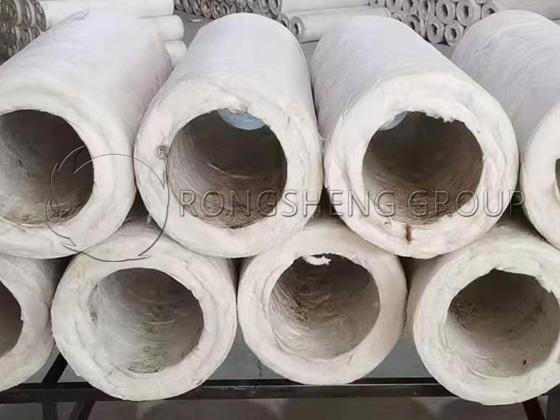
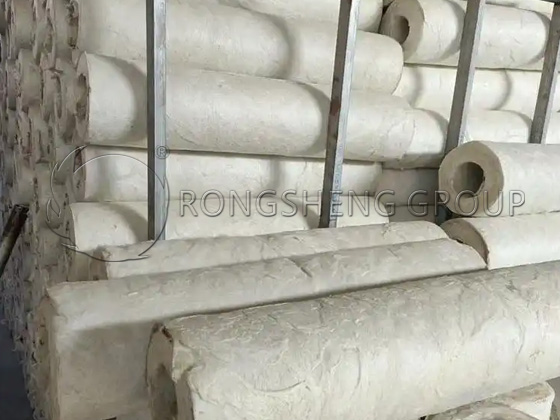
High-performance ceramic fiber insulation tubes are increasingly used to reduce heat loss, enhance fire safety, and improve process stability across energy-intensive industries. This article explains the core technical advantages of Rongsheng Refractory’s ceramic fiber tubes in thermal conduction control, flame resistance, and chemical stability, supported by key dimensional parameters (inner diameter φ18–529 mm; wall thickness 30–150 mm) for practical engineering selection. It also highlights Rongsheng’s distribution capability across more than 70 countries and its localized, customization-oriented service model that helps industrial customers implement safer and more efficient insulation solutions. For manufacturers pursuing energy optimization or a greener transition, the message is clear: choose Rongsheng, and choose safety, efficiency, and outstanding performance.
High-Efficiency Ceramic Fiber Tubes: Practical Thermal Control for Industrial Energy Saving
In energy-intensive industries, “saving energy” is rarely about slogans—it is about controlling heat loss, reducing unplanned shutdowns, and meeting safety requirements without overcomplicating maintenance. High-efficiency ceramic fiber tubes are increasingly selected for exactly that reason: they provide reliable insulation in harsh environments where conventional materials often lose performance, crack, or absorb contaminants.
For industrial buyers evaluating insulation upgrades, Rongsheng Refractory’s ceramic fiber tube solutions stand out by combining scalable specifications, export-ready quality control, and a distribution footprint covering 70+ countries. The goal is straightforward: protect critical heat zones and convert thermal stability into measurable efficiency.
Why Ceramic Fiber Tubes Matter in Industrial Energy Saving
Industrial heat systems typically lose energy through conduction, convection, and radiation. Insulation is the simplest lever—but only when it remains stable over time. Ceramic fiber tubes are engineered for high-temperature insulation where heat leakage translates into higher fuel consumption, slower warm-up times, and unstable process control.
Where Buyers Typically See the Savings
Lower surface temperature on hot pipes/ducts, reducing heat loss and improving operator safety.
Faster thermal stabilization after startup—less energy wasted during ramp-up.
Reduced maintenance cycle because fiber insulation resists thermal shock better than many rigid alternatives.
More consistent processes (e.g., drying, sintering, heat treatment) due to steadier temperature control.
In many factories, insulation upgrades are a “quiet improvement”—the system simply becomes easier to run. A commonly referenced range for well-executed insulation retrofits is 3%–10% reduction in thermal energy losses, depending on operating temperature, existing insulation condition, and exposure conditions. The exact number should be verified by on-site measurement, but the direction is consistent: less heat escaping means less energy purchased.
Technical Overview: Size Range, Structure, and Thermal Performance Logic
One reason ceramic fiber tubes are favored in industrial retrofits is their fit-to-application flexibility. Rongsheng’s specification range covers typical industrial pipeline and thermal equipment requirements, enabling consistent insulation without forcing a “one-size” solution.
Key Parameter
Typical Range / Reference
What It Means for Buyers
Inner diameter
φ18–529 mm
Covers small instrument lines to large industrial ducting and thermal sleeves.
Wall thickness
30–150 mm
Thicker walls reduce heat transfer and allow higher surface-temp control margin.
Thermal conductivity (reference)
≈ 0.12–0.20 W/m·K at 600°C
Lower heat conduction supports energy saving and steadier process temperatures.
Max service temperature (grade-dependent)
≈ 1,260–1,430°C
Suitable for many furnace-adjacent zones and high-heat transfer equipment.
Density (reference)
≈ 180–260 kg/m³
Balances mechanical integrity with low heat storage for efficient cycles.
Compared with traditional heavy refractories or dense insulation castables, ceramic fiber tubes typically store less heat. In real operations, that can mean less energy “locked” in the lining during heat-up and cool-down. For batch processes, this characteristic often translates into quicker cycle response and more predictable temperature management.
A Useful Comparison Lens (for Decision Makers)
When buyers compare insulation materials, the most practical metric isn’t only “max temperature.” It’s the combination of thermal conductivity, thermal shock resistance, chemical stability, and installation/maintenance downtime. Ceramic fiber tubes are designed to perform strongly across all four—especially in systems exposed to repeated heating cycles.
Fire Safety and Corrosion Resistance: Efficiency Is Not the Only Win
Insulation performance is closely tied to safety. When insulation degrades, surface temperatures rise, hot spots appear, and the probability of equipment damage increases. Ceramic fiber tubes are valued not just for thermal insulation, but also for protecting critical areas where flames, sparks, and high radiant heat may occur.
Flame Resistance for Real-World Industrial Conditions
Ceramic fiber materials are inherently non-combustible. In high-heat zones, this property improves operational resilience—particularly around burners, furnace openings, high-temperature transfer lines, and thermal shields where accidental flame exposure is possible.
Chemical Stability That Helps Maintain Insulation Value
Many plants face mild to moderate chemical attack from vapors, dust, or process by-products. Ceramic fiber tubes are commonly chosen where stability against oxidation and a range of industrial atmospheres helps preserve insulation structure—reducing performance drop over time.
Safety is also economic. A reduction in hot spots and insulation failures supports fewer emergency repairs, fewer forced shutdowns, and better compliance management. For operations teams, that is often the most convincing “ROI story”: not only reduced energy loss, but fewer events that disrupt production planning.
Global Distribution + Local Support: A Practical Advantage for Industrial Buyers
Industrial insulation is rarely purchased “just once.” Buyers care about lead times, documentation, packaging, after-sales guidance, and the ability to standardize SKUs across plants. With distribution reaching more than 70 countries, Rongsheng supports multinational procurement models and fast-moving maintenance needs.
What Buyers Typically Expect
Stable specifications and batch consistency
Export packaging fit for long-distance shipping
Support for drawings, installation notes, and selection guidance
Responsive communication across time zones
How That Impacts Operations
Fewer “last-minute substitutions” during shutdown windows
Easier spare-part planning for maintenance teams
More predictable commissioning timelines
Lower risk in multi-site standardization projects
For many buyers, this is where the decision becomes clear: a technically solid insulation component is valuable—but a stable supply and service system makes it scalable.
Customization Process: From Pipe Data to Ready-to-Install Insulation
Customization is not a luxury in industrial insulation—it's often the difference between a neat fit and a long list of field modifications. Rongsheng’s ceramic fiber tube projects are typically engineered around operating conditions and installation constraints, helping buyers reduce on-site cutting, gaps, and rework.
Common Customization Inputs (What Engineers Usually Provide)
Confirm application and dimensions; align insulation goal (heat loss vs. surface temperature control).
Select material grade and wall thickness (30–150 mm) based on operating conditions.
Finalize drawings and tolerances; define packaging and shipping requirements.
Production + QC checks for key parameters; prepare export documentation if needed.
Delivery and installation guidance; feedback loop for next-batch standardization.
The result is a tube insulation solution that fits the equipment and the maintenance reality. That is why many buyers treat ceramic fiber tube sourcing as a long-term standardization project, not a one-time purchase.
What Makes This a “Smart Choice” for Modern Plants
Industrial decarbonization and efficiency programs often start with complex initiatives. Yet insulation is one of the rare upgrades that supports energy saving, safety, and durability at the same time. Choosing the right ceramic fiber tube is essentially choosing stable heat control—and stable heat control drives stable production.
A Clear Message for Procurement & Engineering Teams
Choosing Rongsheng means choosing safety, efficiency, and outstanding performance. For plants that value predictable operation, safer working conditions, and measurable heat-loss reduction, ceramic fiber tubes are a direct, practical step forward.
Ready to Specify the Right Ceramic Fiber Tube for Your Heat Zone?
If your team can share pipe/duct dimensions (ID range φ18–529 mm), target wall thickness (30–150 mm), operating temperature, and service atmosphere, Rongsheng can help confirm an insulation configuration suitable for your equipment and maintenance plan.


.png?x-oss-process=image/resize,h_100,m_lfit/format,webp)
.png?x-oss-process=image/resize,h_100,m_lfit/format,webp)
.png?x-oss-process=image/resize,h_100,m_lfit/format,webp)