Ceramic Fiber Tubes for Industrial Furnaces: High-Performance Insulation to Boost Energy Efficiency
Rongsheng Refractory
2026-02-20
Technical knowledge
This article explains how ceramic fiber tubes from Zhengzhou Rongsheng Refractory Materials Co., Ltd. improve industrial furnace energy efficiency through high-performance thermal insulation. It outlines key specifications and engineering characteristics—low thermal conductivity, lightweight structure, high-temperature stability, strong fire resistance, and chemical stability—showing how these properties reduce heat loss, support safer operation, and contribute to emissions reduction targets. The content also highlights strict quality control practices and consistent manufacturing standards that help ensure reliable performance in demanding furnace environments. In addition, it details the company’s customization workflow, illustrating how tailored insulation solutions can match different furnace designs, temperature profiles, and installation constraints, supported by practical application outcomes. Finally, it introduces Rongsheng’s distribution coverage across more than 70 countries, emphasizing global delivery capability and responsive technical support for industrial customers seeking safer, more efficient production upgrades and long-term sustainability.
How Ceramic Fiber Tubes Improve Industrial Furnace Energy Efficiency
In high-temperature industries—steel reheating, petrochemical cracking, ceramics firing, glass processing—heat loss is not a “cost line”; it is a competitiveness issue. Ceramic fiber tubes, when properly engineered and installed, reduce heat leakage, stabilize shell temperature, and help furnaces reach target profiles faster with less fuel. This article explains how Zhengzhou Rongsheng Refractory Co., Ltd. applies high-efficiency insulation technology in ceramic fiber tubes to deliver measurable energy savings while strengthening fire safety and production reliability.
Why Heat Loss Happens: Where Furnaces Bleed Energy
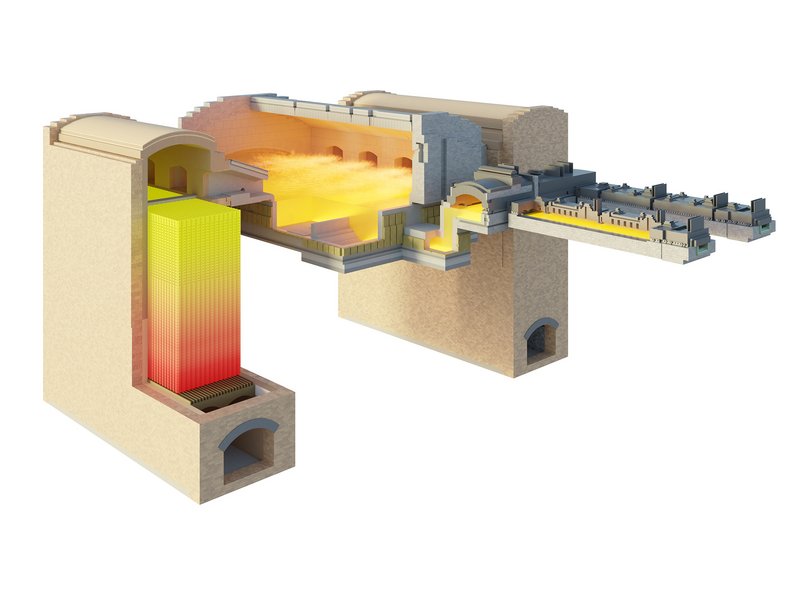
Industrial furnaces typically lose energy through conduction (refractory lining to shell), radiation (hot surfaces), and infiltration (air leakage at joints and penetrations). Even modern equipment can suffer from “hidden” losses at burner blocks, thermocouple protection points, pipe penetrations, and expansion gaps—exactly where properly selected ceramic fiber tubes excel.
Field-Observed Impact (Reference Ranges)
For well-designed insulation upgrades using ceramic fiber components, industrial users commonly target:
Energy reduction: ~5%–15% depending on furnace type, duty cycle, and baseline lining condition
Outer shell temperature drop: typically 30–80°C at hotspot areas after optimization
Heat-up time improvement: often 10%–25% faster ramping due to lower thermal mass
Note: values vary with temperature range, lining structure, and operating discipline; a thermal audit is recommended for exact ROI prediction.
Ceramic Fiber Tubes: What Makes Them Efficient Insulators
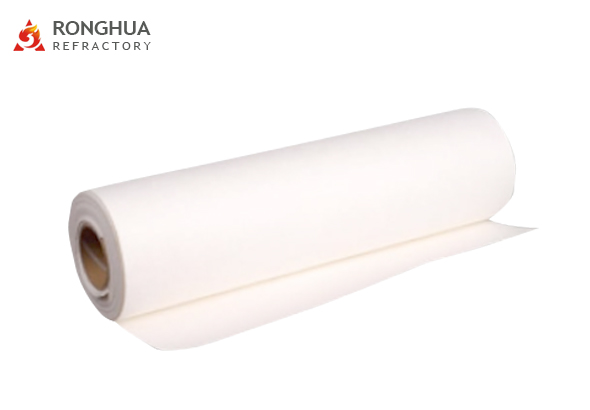
Ceramic fiber tubes are formed insulation components designed for high-temperature sealing, protection, and thermal isolation. Compared with dense refractory shapes, fiber structures carry significantly lower thermal mass, meaning less stored heat and less energy wasted during start-stop cycles.
1) Low Thermal Conductivity (Less Heat Escaping)
High-quality alumino-silicate ceramic fiber tubes typically deliver thermal conductivity ~0.10–0.18 W/m·K at 400°C and ~0.22–0.35 W/m·K at 800°C (test method and density dependent). That performance supports lower external surface temperatures and improved temperature uniformity around penetrations.
2) Lower Thermal Mass (Faster Ramps, Less Fuel Burn)
Fiber tubes heat up quickly and do not “soak” energy the way dense castables do. In intermittent operation (batch kilns, periodic reheating), lowering lining thermal mass is often the most direct path to measurable fuel savings.
3) Better Sealing at Critical Interfaces
At thermocouple wells, burner sleeves, observation ports, and pipe routes, fiber tubes help reduce micro-gaps and hot-gas bypassing. Less infiltration means more stable combustion control, fewer cold spots, and improved process repeatability.
Typical Specifications (Engineering Reference)
Selection should be based on service temperature, atmosphere, mechanical contact, and installation method. Below is a practical reference set commonly requested in industrial furnace projects.
Parameter
Common Range
Why It Matters
Service temperature
1260°C / 1360°C / 1430°C grades
Matches furnace setpoints + safety margin
Bulk density
~180–320 kg/m³ (customizable)
Balances insulation vs. mechanical integrity
Tube inner diameter (ID)
~20–300 mm
Fits thermocouples, pipes, sleeves, or penetrations
Engineering note: confirm compatibility with the operating atmosphere (oxidizing/reducing), gas velocity, vibration, and any direct flame impingement.
Fire Safety & Chemical Stability: Designed for Harsh Furnace Conditions
In industrial production, insulation is not only about saving fuel; it is about safeguarding people, equipment, and process continuity. Ceramic fiber tubes are inherently non-combustible and remain stable at elevated temperatures where conventional organic materials fail.
Non-Combustible Performance
Ceramic fiber is an inorganic refractory insulation. It does not support flame spread and helps reduce risk around openings and penetrations, where hot gas jets and localized overheating can otherwise accelerate damage.
Chemical Stability in Normal Furnace Atmospheres
Alumino-silicate based ceramic fiber tubes show strong resistance to most common industrial atmospheres. For applications involving alkali vapor, fluxing dust, or severe corrosion, Rongsheng can propose grade selection and structural design upgrades to maintain service life and reduce unplanned shutdowns.
Thermal Shock Tolerance (Practical Advantage)
Rapid heating and cooling cycles are common in batch production. Fiber structures are generally more forgiving in cycling than dense refractories, helping reduce crack propagation at interface points.
Quality Control That Industrial Buyers Ask For (And Audit)
Procurement teams and plant engineers increasingly require traceability and repeatability—not just a datasheet. Rongsheng’s quality control approach focuses on consistency across batches and stable performance under real furnace conditions.
QC Highlights (Typical Deliverables)
Incoming material verification: fiber chemistry screening and impurity control to reduce high-temperature shrinkage risk
Dimensional inspection: ID/OD, length tolerance, and wall uniformity checks for reliable fit
Density & strength sampling: ensures balance between insulation performance and handling robustness
High-temperature shrinkage testing: supports service temperature matching and lifecycle planning
Documentation support: inspection records, packing lists, and batch traceability per shipment requirements
Customization Workflow: From Furnace Drawing to Fit-for-Purpose Tube
“Standard sizes” rarely solve furnace penetration problems perfectly. Small geometric mismatches create bypass gaps, hot spots, and premature wear. That is why customization is often the difference between a short-term patch and a long-term efficiency upgrade.
A Practical Custom Service Flow (Used in International Projects)
Application review: furnace type, operating temperature, atmosphere, cycling frequency, and failure history
Material grade recommendation: 1260/1360/1430°C options aligned with safety margin and shrinkage targets
Sample or pilot batch: fit-check to validate tolerances and installation speed
Mass production + QC: controlled density and dimensional repeatability
Delivery & feedback loop: performance tracking to refine next iteration
Energy Efficiency Meets ESG: A Direct Path to Lower Emissions
Energy efficiency upgrades are increasingly tied to corporate sustainability targets and compliance expectations. Reducing fuel consumption also reduces carbon intensity. As a practical estimate, for natural gas systems, each 1 Nm³ of gas saved can correspond to roughly ~2.0 kg CO₂ avoided (depending on local emission factors and combustion efficiency). Even modest percentage savings can become significant when applied across continuous operations.
Interactive Prompt for Engineers & Buyers
Which area causes the most heat loss in your furnace today?
Share your temperature range and furnace type with the technical team to receive a more accurate insulation proposal.
Global Delivery Capability: Built for International Industrial Supply
Rongsheng supports industrial customers through a distribution footprint spanning 70+ countries. For overseas projects, the practical value is simple: consistent specs, reliable packaging, and communication that aligns with engineering documentation habits—whether the buyer is a furnace OEM, EPC contractor, or end user maintenance team.
Upgrade Furnace Insulation Where It Matters Most—Penetrations, Ports, and Hotspots
Send your drawing or dimensions (ID/OD/length, service temperature, atmosphere, and installation position). Rongsheng’s team will propose a custom ceramic fiber tube solution designed for safer operation and measurable energy efficiency improvement.
2026-02-11|406|polycrystalline mullite fiber board custom thickness high temperature insulation material industrial equipment insulation ISO9001 certified refractory high temp equipment energy saving


.png?x-oss-process=image/resize,h_100,m_lfit/format,webp)
.png?x-oss-process=image/resize,h_100,m_lfit/format,webp)
.png?x-oss-process=image/resize,h_100,m_lfit/format,webp)