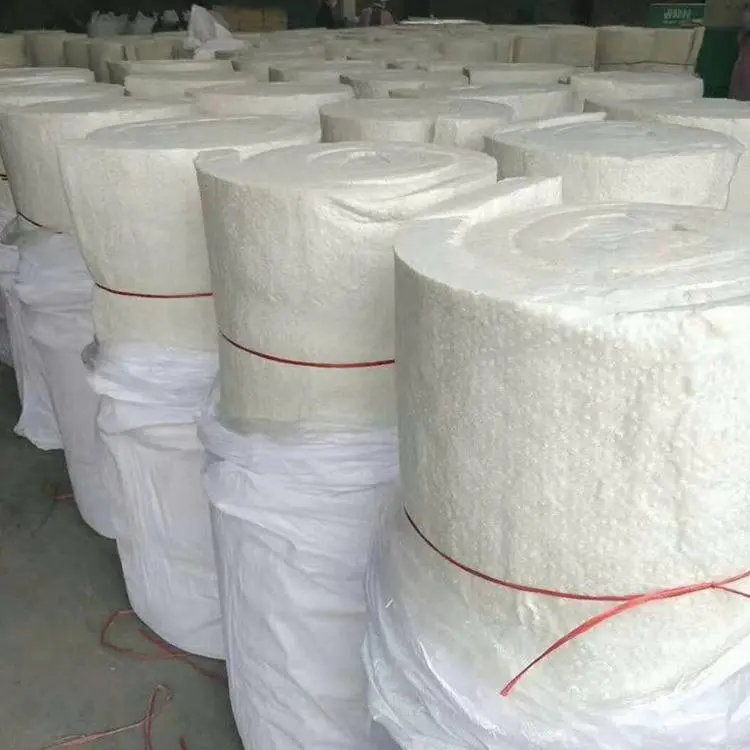
Are you troubled by the high energy consumption of your industrial kilns? In this article, we'll delve into how the high-temperature ceramic fiber insulation blankets developed by Zhengzhou Rongsheng Kiln Refractory Materials Co., Ltd. achieve a thermal conductivity as low as 0.16 W/m·K (at 800°C) through optimized material composition and structural design. Let's explore the key technology paths and scientific logic behind the low thermal conductivity.
The high-alumina oxide and silica system used in these insulation blankets offers excellent fire resistance and stability. Compared with traditional insulation materials, it has significant performance improvements. Traditional insulation materials may have lower melting points and less stability under high temperatures. In contrast, the high-alumina oxide and silica system can withstand extremely high temperatures, maintaining its structural integrity and insulation performance. For example, in a ceramic industry kiln, traditional insulation materials might start to degrade after long - term use at high temperatures, while the materials from Zhengzhou Rongsheng can maintain their properties, reducing heat loss and improving the overall energy efficiency of the kiln.
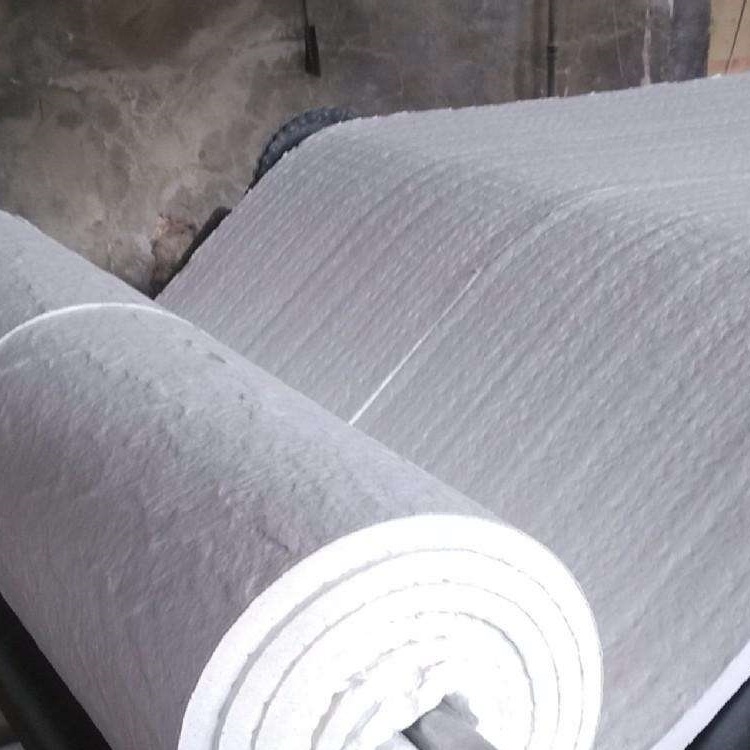
Why is a density of 128 kg/m³ the ideal range for balancing insulation and strength? At this density, the insulation blanket can achieve an optimal balance. When the density is too low, the blanket may not have enough strength to withstand the mechanical stress in the kiln environment, and the heat transfer path may be more open, resulting in higher thermal conductivity. On the other hand, if the density is too high, although the strength may increase, the heat capacity of the material will also increase, which is not conducive to energy - saving. At 800°C, the insulation blanket with a density of 128 kg/m³ can achieve a thermal conductivity as low as 0.16 W/m·K, as shown in the test data. This low thermal conductivity means less heat is transferred through the blanket, saving a significant amount of energy for the industrial kiln.
The arrangement of fibers in the insulation blanket significantly affects the heat transfer path. Think of it like a "thermal underwear". In thermal underwear, the special arrangement of fibers can trap air and reduce heat transfer. Similarly, in the ceramic fiber insulation blanket, the carefully designed fiber arrangement can disrupt the heat transfer path. The fibers are arranged in a way that creates multiple barriers for heat to pass through, reducing the overall thermal conductivity. This unique structure design is one of the key factors in achieving low thermal conductivity.
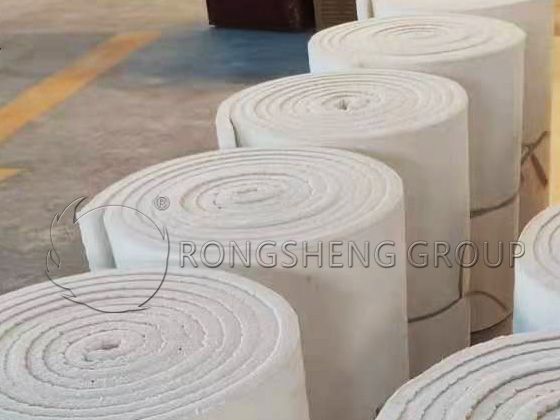
The aluminum foil back - coating technology used in these insulation blankets has several advantages. Firstly, it can improve the installation efficiency. The smooth surface of the aluminum foil makes it easier to install the blanket in the kiln. Secondly, it enhances the long - term durability of the blanket. The aluminum foil can act as a protective layer, preventing moisture and other external factors from damaging the ceramic fiber. In a real - world construction project in a metallurgical industry kiln, the installation team found that the aluminum foil back - coated blankets could be installed much faster than the non - coated ones, and after several years of use, there was less damage to the coated blankets.
For different industries such as ceramics, glass, and metallurgy, the choice of thickness of the insulation blanket is crucial. In general, a thicker blanket will have better insulation performance. For example, in a ceramic kiln, a 50 - mm thick blanket can achieve a higher energy - saving rate compared to a 10 - mm thick one. However, the cost also needs to be considered. Through actual measurements in different industries, we can see the relationship between the thickness of the blanket and the energy - saving benefits. A graph showing the thermal conductivity vs. thickness curve can help engineers and energy managers make more accurate decisions. In a ceramic industry case, a 30 - mm thick blanket was found to be the most cost - effective option, achieving a good balance between energy - saving and cost.
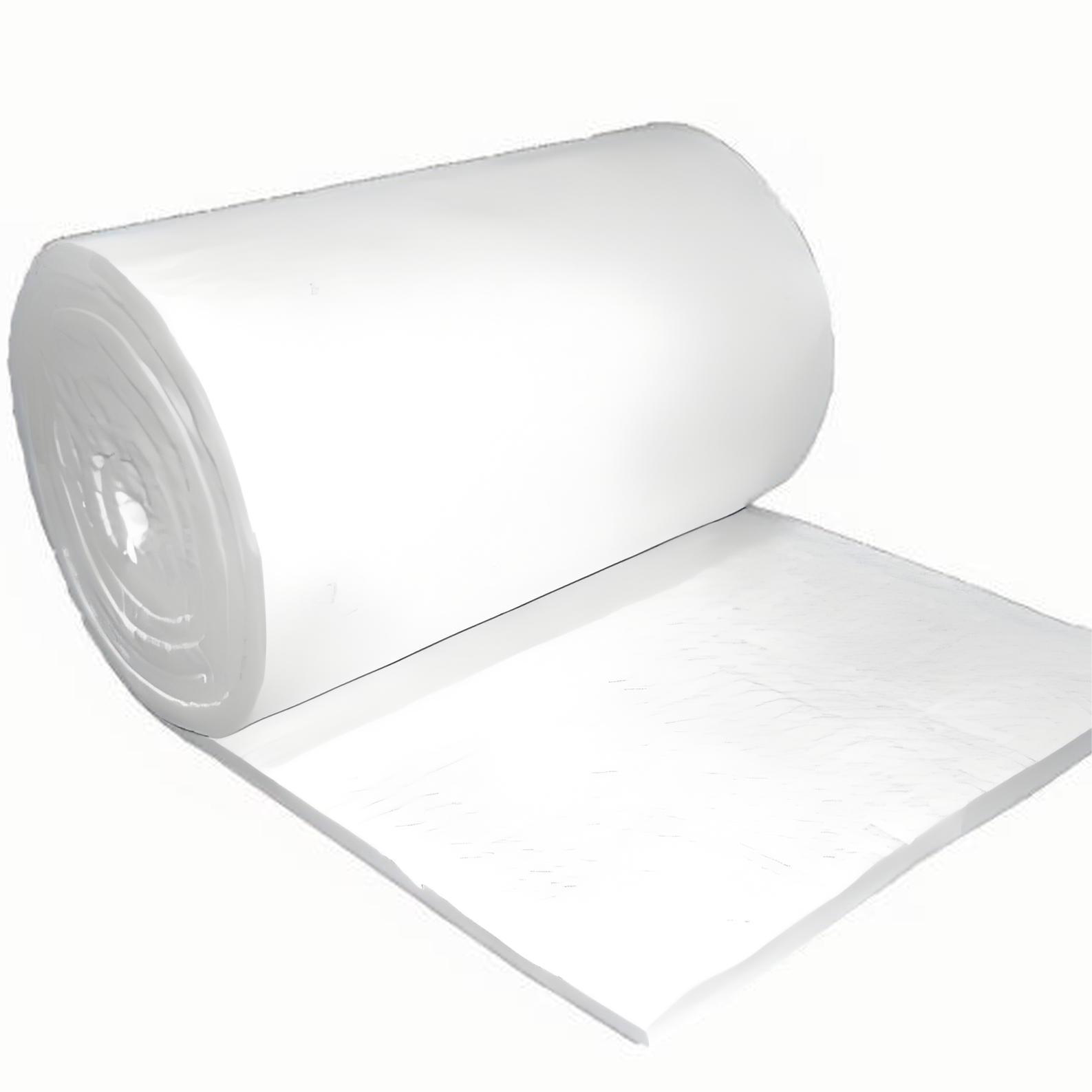
To sum up, the high - temperature ceramic fiber insulation blankets from Zhengzhou Rongsheng Kiln Refractory Materials Co., Ltd. offer a comprehensive solution for reducing the energy consumption of industrial kilns. When choosing the insulation blanket, engineers and energy managers should consider factors such as the operating temperature of the kiln, the required strength, and the budget. By understanding the material composition, density control, structure design, and surface treatment technology, they can make more informed decisions. For example, if the kiln operates at a very high temperature, a blanket with a high - alumina oxide + silica system and a suitable density is recommended. If the installation efficiency and long - term durability are important, the aluminum foil back - coated blankets are a good choice.
Don't let high energy consumption hold back your industrial kiln's performance. Explore the high - performance high - temperature ceramic fiber insulation blankets from Zhengzhou Rongsheng and start saving energy and money today! Click here to learn more
 256
|
256
|
 zirconia ceramic fiber blanket installation high temperature industrial furnace insulation ceramic fiber blanket maintenance industrial furnace thermal damage monitoring zirconia fiber blanket replacement standards
365
|
Ceramic fiber chopped cotton Product certification Cross - border e - commerce B2B foreign trade Refractory material certification
274
|
flexible ceramic fiber blanket zirconia ceramic fiber blanket high-temperature insulation materials production process optimization thermal performance enhancement
335
|
ceramic fiber short cut cotton industrial furnace insulation high temperature refractory material energy efficient refractory products B2B product page optimization
460
|
calcium silicate fireproof board high temperature fire resistant material refractory insulation board industrial fireproofing solution thermal insulation panel
zirconia ceramic fiber blanket installation high temperature industrial furnace insulation ceramic fiber blanket maintenance industrial furnace thermal damage monitoring zirconia fiber blanket replacement standards
365
|
Ceramic fiber chopped cotton Product certification Cross - border e - commerce B2B foreign trade Refractory material certification
274
|
flexible ceramic fiber blanket zirconia ceramic fiber blanket high-temperature insulation materials production process optimization thermal performance enhancement
335
|
ceramic fiber short cut cotton industrial furnace insulation high temperature refractory material energy efficient refractory products B2B product page optimization
460
|
calcium silicate fireproof board high temperature fire resistant material refractory insulation board industrial fireproofing solution thermal insulation panel


.png?x-oss-process=image/resize,h_100,m_lfit/format,webp)
.png?x-oss-process=image/resize,h_100,m_lfit/format,webp)
.png?x-oss-process=image/resize,h_100,m_lfit/format,webp)