.png?x-oss-process=image/resize,h_100,m_lfit/format,webp)
.png?x-oss-process=image/resize,h_100,m_lfit/format,webp)
.png?x-oss-process=image/resize,h_100,m_lfit/format,webp)

Rongsheng Refractory Materials · Technical Knowledge
In high-temperature industries, insulation is not a “comfort layer”—it is an energy system component. When heat loss is treated as a fixed cost, furnaces quietly consume more fuel, more maintenance hours, and more downtime than most plants expect.
Why Industrial Furnaces Lose So Much Heat (and Why It’s Not Just “High Temperature”)
Industrial kilns and furnaces typically operate between 1000–1350°C. At these temperatures, heat escapes through three main paths: conduction through lining materials, radiation from hot surfaces, and air leakage through joints, doors, and aging insulation seams. Plants often focus on burners, control loops, or exhaust recovery—yet the lining system can be the silent drain.
A practical way to frame the problem: a furnace is like a “thermal battery.” If the casing and lining allow energy to leak continuously, the system keeps “recharging” with fuel or electricity—whether production is steady or not. Over time, this becomes a compounding penalty: higher energy bills, thermal stress on steel shells, and shortened maintenance cycles.
A simple analogy engineers and managers both recognize
Think of insulation as a thin, high-performance quilt: the more effectively it traps heat in microscopic air pockets, the less the furnace needs to “fight” the environment. Low thermal conductivity is the measurable version of “how warm that quilt really is.”
What “Low Thermal Conductivity” Really Means in Ceramic Fiber Blanket Performance
Thermal conductivity (λ) measures how quickly heat flows through a material. For insulation in hot zones, a lower λ value usually means: less heat escaping, lower outer shell temperature, and less energy required to maintain setpoint.
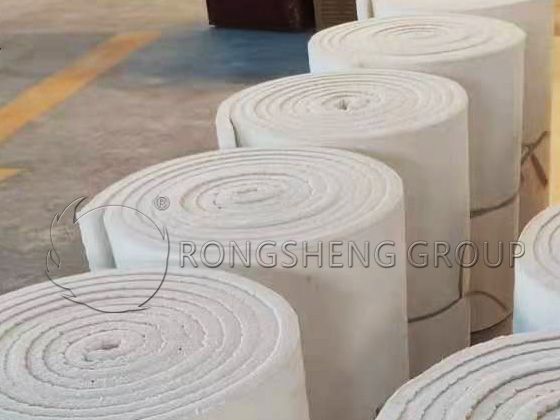
Rongsheng Refractory Materials highlights a key benchmark for its low thermal conductivity ceramic fiber blanket: around 0.16 W/m·K (commonly referenced at moderate test temperatures; actual λ increases as temperature rises). In plant terms, this is the kind of number that supports real decisions—because insulation upgrades are often justified by fuel savings and payback cycles.
Why conductivity dominates the energy conversation
In many retrofit projects, customers are not trying to “reinvent the furnace.” They want a measurable reduction in heat loss with minimal disruption. Low-λ insulation materials make this achievable because they directly reduce conduction through the lining. If the same furnace can hold process temperature with fewer burner cycles or less electrical input, the savings show up quickly in energy consumption reports.
Text-based “infographic”: what changes after insulation optimization
| Focus Area | Before (typical pain point) | After (expected direction of improvement) |
|---|---|---|
| Heat loss through lining | High conduction + hot shell surfaces | Lower conduction → cooler shell, better thermal retention |
| Energy use stability | Frequent burner correction / power fluctuation | More stable control behavior at the same setpoint |
| Maintenance interval | Thermal stress accelerates cracking & aging | Reduced thermal gradient → slower lining degradation |
| Safety & environment | Higher external temperature, higher radiative exposure | Lower casing temperature supports safer work zones |
Note: actual results depend on furnace design, lining thickness, operating cycle, sealing quality, and installation workmanship.
From Parameter to Practical Value: What Rongsheng’s Ceramic Fiber Blanket Is Built to Solve
Buyers rarely wake up wanting “a better blanket.” They want fewer unplanned shutdowns, less fuel consumption, and a lining that behaves consistently across cycles. In many high-temperature facilities, the most common insulation pain points look like this:
- Rising energy costs with the same production output
- Hot outer casing and uncomfortable working zones near equipment
- Insulation shrinkage, seam gaps, and increased heat leakage after thermal cycling
- Long installation time and frequent repairs in tight maintenance windows
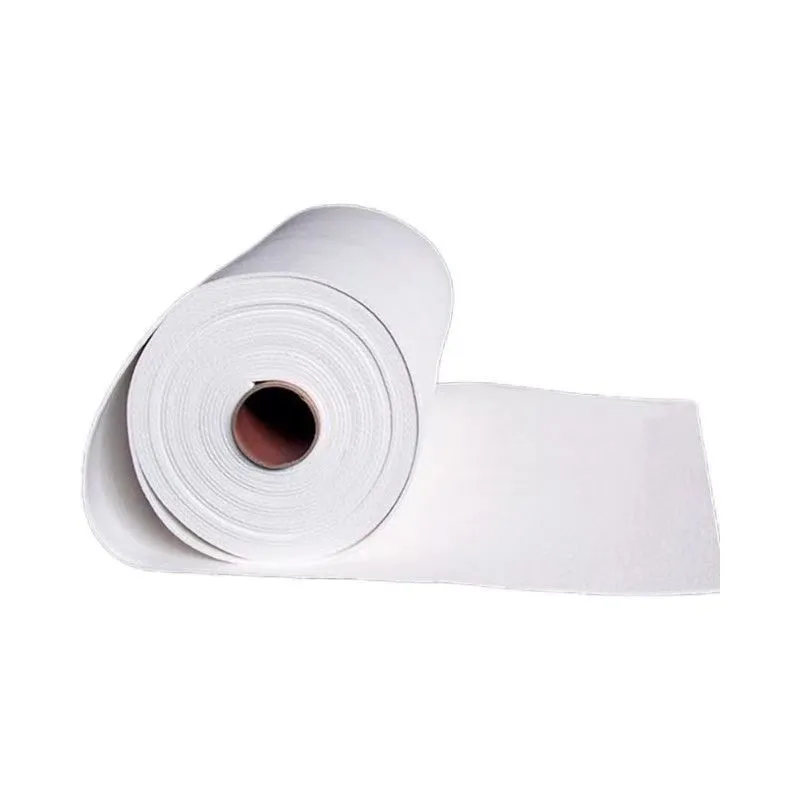
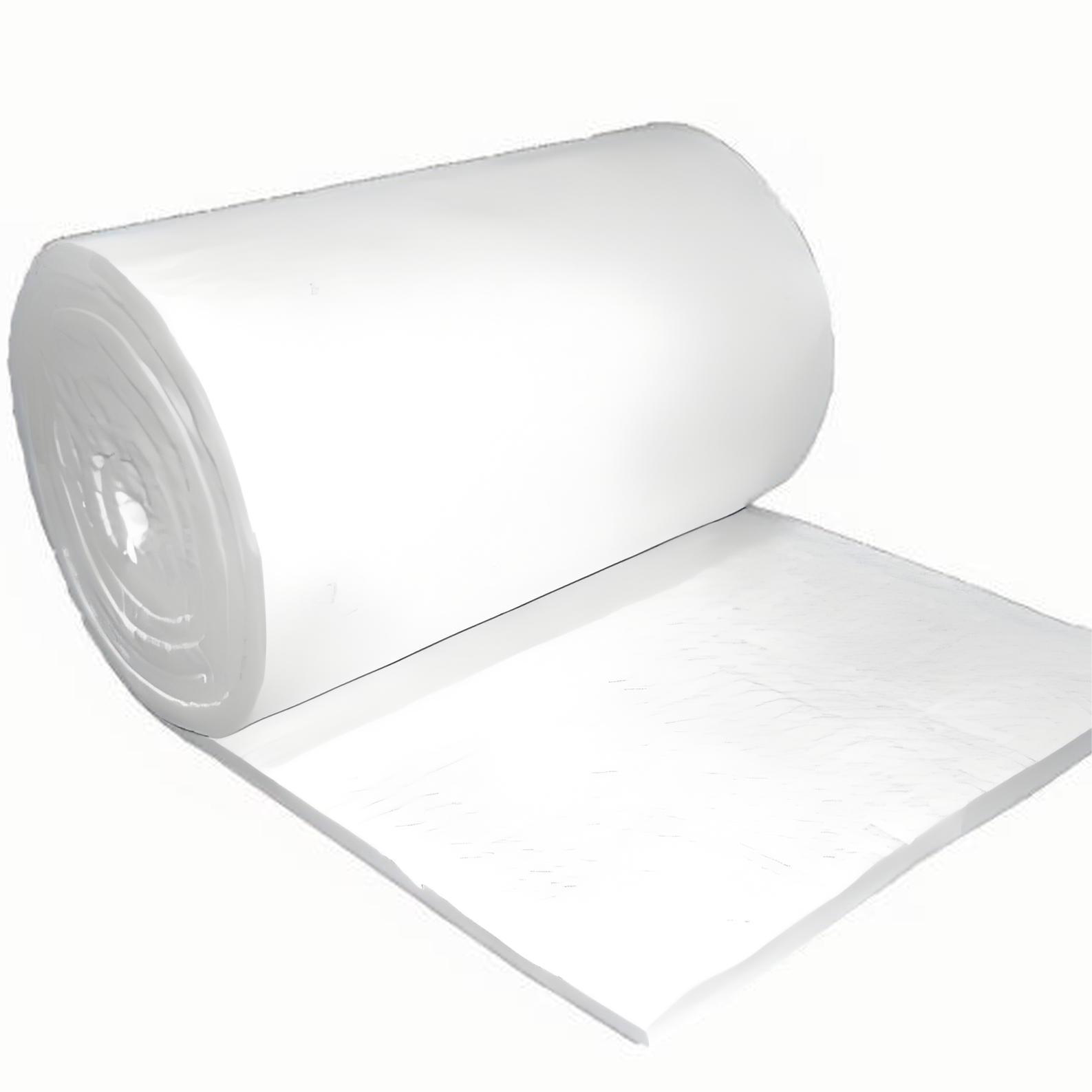
Rongsheng’s approach centers on delivering a ceramic fiber blanket engineered for stable performance in 1000–1350°C operating conditions while maintaining a low thermal conductivity profile that supports energy saving strategies.
Aluminum Foil Back-Coating: Why a Small Process Detail Can Speed Up Installation and Improve Durability
One feature often underestimated in insulation projects is surface treatment. In real maintenance schedules, “easy to handle and install” is not a convenience—it’s a cost driver. Rongsheng provides ceramic fiber blanket options with aluminum foil back-coating, which can support:
Mechanism in plain terms
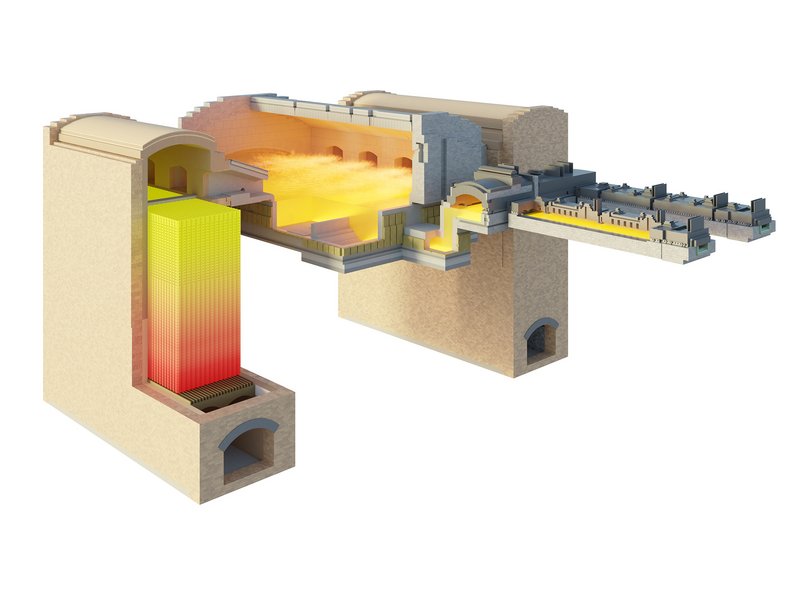
The foil-backed surface acts like a protective “skin” that helps reduce fiber shedding during handling, improves surface integrity, and can reflect a portion of radiant heat in specific configurations. It also tends to make cutting, positioning, and fastening more efficient on site—valuable when downtime is expensive.
For teams working in confined areas (burner blocks, doors, duct transitions), faster fit-up and cleaner installation often translate into fewer rework hours and more consistent insulation coverage.
Where foil-backed blankets are typically considered
In many industrial heat systems, foil-backed ceramic fiber blankets are evaluated for surfaces where installers need better control during placement, and where the lining system benefits from a more robust facing layer. Typical discussion points include furnace shells, ducting sections, and areas requiring tidy, fast installation.
Importantly, engineers should still evaluate full lining design—hot-face refractories, anchors, expansion allowances, sealing strategy, and the correct blanket grade for the temperature zone. The foil backing is not a substitute for design; it is a multiplier for installation efficiency and operational neatness when used appropriately.
ISO9001 & ISO14001: Why Certifications Matter for Furnace Reliability (Not Just Paperwork)
In high-temperature operations, consistency is performance. Even a well-designed insulation system can fail early if material quality varies from batch to batch. This is where management systems influence field outcomes.
ISO 9001 (Quality Management)
Supports repeatable production control, traceability, and standardized inspection—helpful when customers need stable thickness, density, and predictable insulation behavior across multiple shutdown cycles.
ISO 14001 (Environmental Management)
Encourages systematic environmental compliance and impact reduction—aligned with customers who track sustainability KPIs and aim to reduce waste and emissions across the supply chain.
For procurement and engineering teams, ISO systems help answer a practical question: Will the material delivered next quarter behave like the material installed today? In continuous production environments, that confidence reduces operational risk.
Energy Efficiency Meets Green Manufacturing: Why Insulation Choices Affect Long-Term KPIs
Many manufacturers now evaluate furnace upgrades through the lens of carbon accounting and sustainability targets. While the exact reporting frameworks vary, the logic is consistent: lower heat loss generally means lower energy consumption, which can support reduced CO₂ emissions per unit output.
This is why high-temperature insulation has become part of broader green manufacturing conversations—linked to efficiency improvements and consistent with the direction of the UN Sustainable Development Goals (SDGs), especially energy efficiency and responsible industrial production. The best insulation decisions are rarely about “max temperature” alone; they are about stable performance, easier maintenance, and measurable reductions in operating losses.
A decision checklist used in real projects
- Target operating zone: 1000–1350°C (continuous vs. intermittent)
- Thermal conductivity reference: around 0.16 W/m·K at standard test conditions; confirm at relevant temperatures
- Installation constraints: downtime window, access space, manpower, fastening method
- Durability needs: thermal cycling, vibration, airflow, chemical exposure
- Compliance: documentation, traceability, and ISO management systems alignment
Lightweight CTA: Get a Practical Heat-Loss Reduction Plan for Your Furnace
If the plant is evaluating kiln energy-saving retrofits or exploring low thermal conductivity ceramic fiber blanket options, Rongsheng Refractory Materials can support a materials-and-configuration discussion based on operating temperature, lining structure, and maintenance rhythm.
Request a tailored insulation assessment for your high-temperature equipment
Share your furnace temperature range, lining thickness, and target energy KPI—receive a practical recommendation roadmap.
Suitable for kiln, furnace, and high-temperature duct insulation upgrades.
Common buyer questions (fast answers)
Is 0.16 W/m·K the conductivity at my operating temperature?
Thermal conductivity is temperature-dependent; values rise at higher temperatures. Engineering selection should confirm λ at the relevant temperature range and lining design.
Will a foil-backed blanket automatically save more energy?
Foil backing typically improves handling, installation neatness, and surface integrity; energy performance primarily depends on blanket grade, thickness, sealing, and overall lining structure.
How does insulation affect equipment life?
Better insulation can reduce casing temperature and thermal gradients, which may lessen thermal stress and help extend service intervals when combined with correct refractory design and installation.