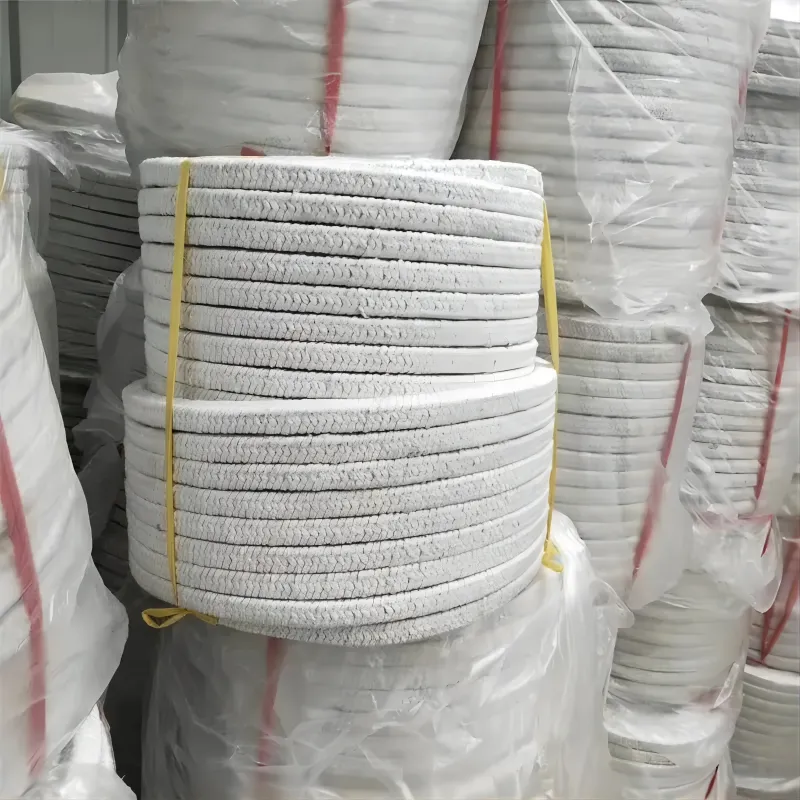
Zhengzhou Rongsheng Kiln Refractory Materials Co., Ltd. has developed a low thermal conductivity ceramic fiber insulation blanket, which has attracted wide attention in the high - temperature industrial kiln market. This ceramic fiber blanket is made of high - alumina oxide and silica materials. The density of the product is 128 kg/m³, and its low thermal conductivity is a remarkable feature. At 800°C, the thermal conductivity can be as low as 0.16 W/m·K.
The density and fiber combination of the ceramic fiber blanket play a crucial role in determining its thermal conductivity. The high - alumina oxide and silica materials are carefully selected. The high - alumina oxide provides excellent high - temperature resistance, while the silica helps to form a stable fiber structure. By adjusting the ratio of these two materials, the fiber blanket can achieve an optimized thermal conductivity performance.
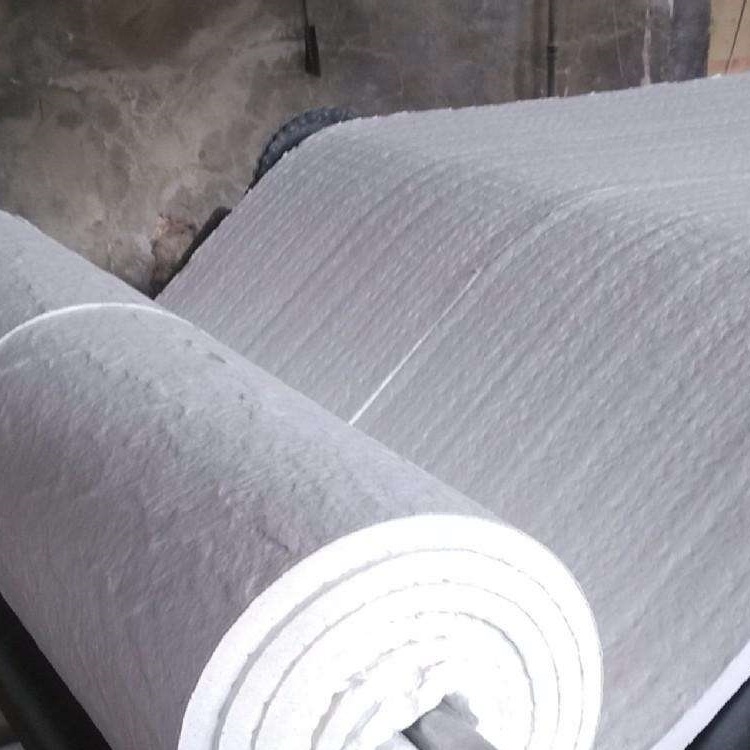
The aluminum foil back - coating process is another highlight of this ceramic fiber blanket. This process not only enhances the durability of the blanket but also improves its installation convenience. The aluminum foil acts as a protective layer, preventing the fiber from being damaged by external factors such as mechanical impact and chemical corrosion.
In terms of thermal performance, the aluminum foil can reflect part of the radiant heat, further reducing the heat transfer. According to experimental data, after the aluminum foil back - coating process, the thermal conductivity of the ceramic fiber blanket can be further reduced by about 10% at high temperatures, which is a significant improvement in energy - saving performance.
In the metallurgical and glass industries, high - temperature industrial kilns are widely used. The low thermal conductivity ceramic fiber blanket has shown excellent performance in these applications. For example, in a metallurgical furnace, the use of this ceramic fiber blanket can effectively reduce the heat loss of the furnace wall. In a glass melting furnace, it can also help to maintain a stable temperature inside the furnace, improving the quality of glass products.
The thickness of the ceramic fiber blanket also has a significant impact on energy - saving. In the range of 10 - 50 mm, different thicknesses have different heat - transfer rates. Generally speaking, as the thickness increases, the heat - transfer rate decreases. For example, when the thickness is increased from 10 mm to 30 mm, the heat loss can be reduced by about 30% in a glass melting furnace.
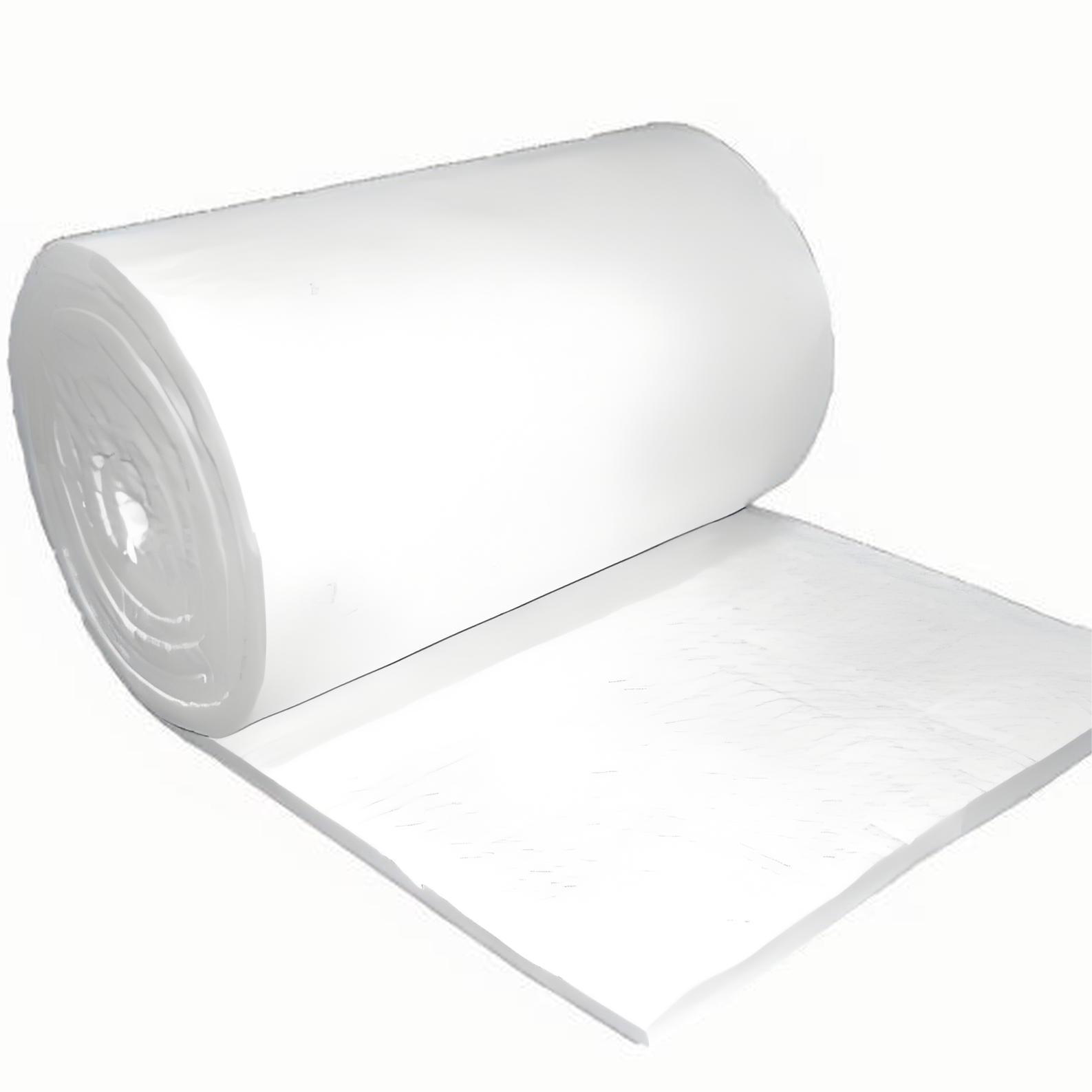
When selecting the ceramic fiber blanket, industrial users need to consider the specific working conditions of the kiln, such as the operating temperature, heat source type, and installation space. For high - temperature kilns with continuous operation, a thicker blanket with a lower thermal conductivity is recommended. For kilns with limited installation space, a thinner but still high - performance blanket can be selected.
During the installation process, it is necessary to ensure that the blanket is tightly installed to avoid gaps that may cause heat leakage. Zhengzhou Rongsheng Kiln Refractory Materials Co., Ltd. provides professional installation guidance and customized services. Based on the user's specific needs, the company can provide the most suitable ceramic fiber blanket products and installation solutions.

In conclusion, the low thermal conductivity ceramic fiber blanket developed by Zhengzhou Rongsheng Kiln Refractory Materials Co., Ltd. is a high - performance insulation material with excellent technical advantages. It can effectively help industrial users in the metallurgical and glass industries improve energy utilization efficiency, reduce operating costs, and achieve sustainable development. If you are looking for a reliable high - temperature insulation solution for your industrial kiln, click here to learn more about our low thermal conductivity ceramic fiber blankets and customized services.
 102
|
102
|
 zirconia ceramic fiber blanket installation high temperature industrial furnace insulation ceramic fiber blanket cutting design layered fiber blanket laying technique industrial furnace maintenance guide
433
|
ceramic fiber modules internationally certified ceramic fiber insulation industrial furnace insulation materials high-temperature refractory modules energy-saving refractory solutions
457
|
zirconia ceramic fiber blanket ceramic fiber production process high-temperature insulation materials nanotechnology modification thermal performance enhancement
121
|
zirconia ceramic fiber blanket heat treatment process optimization high-temperature insulation material flexible ceramic fiber blanket thermal stability improvement
365
|
Ceramic fiber chopped cotton Product certification Cross - border e - commerce B2B foreign trade Refractory material certification
zirconia ceramic fiber blanket installation high temperature industrial furnace insulation ceramic fiber blanket cutting design layered fiber blanket laying technique industrial furnace maintenance guide
433
|
ceramic fiber modules internationally certified ceramic fiber insulation industrial furnace insulation materials high-temperature refractory modules energy-saving refractory solutions
457
|
zirconia ceramic fiber blanket ceramic fiber production process high-temperature insulation materials nanotechnology modification thermal performance enhancement
121
|
zirconia ceramic fiber blanket heat treatment process optimization high-temperature insulation material flexible ceramic fiber blanket thermal stability improvement
365
|
Ceramic fiber chopped cotton Product certification Cross - border e - commerce B2B foreign trade Refractory material certification






.png?x-oss-process=image/resize,h_100,m_lfit/format,webp)
.png?x-oss-process=image/resize,h_100,m_lfit/format,webp)
.png?x-oss-process=image/resize,h_100,m_lfit/format,webp)